


Description
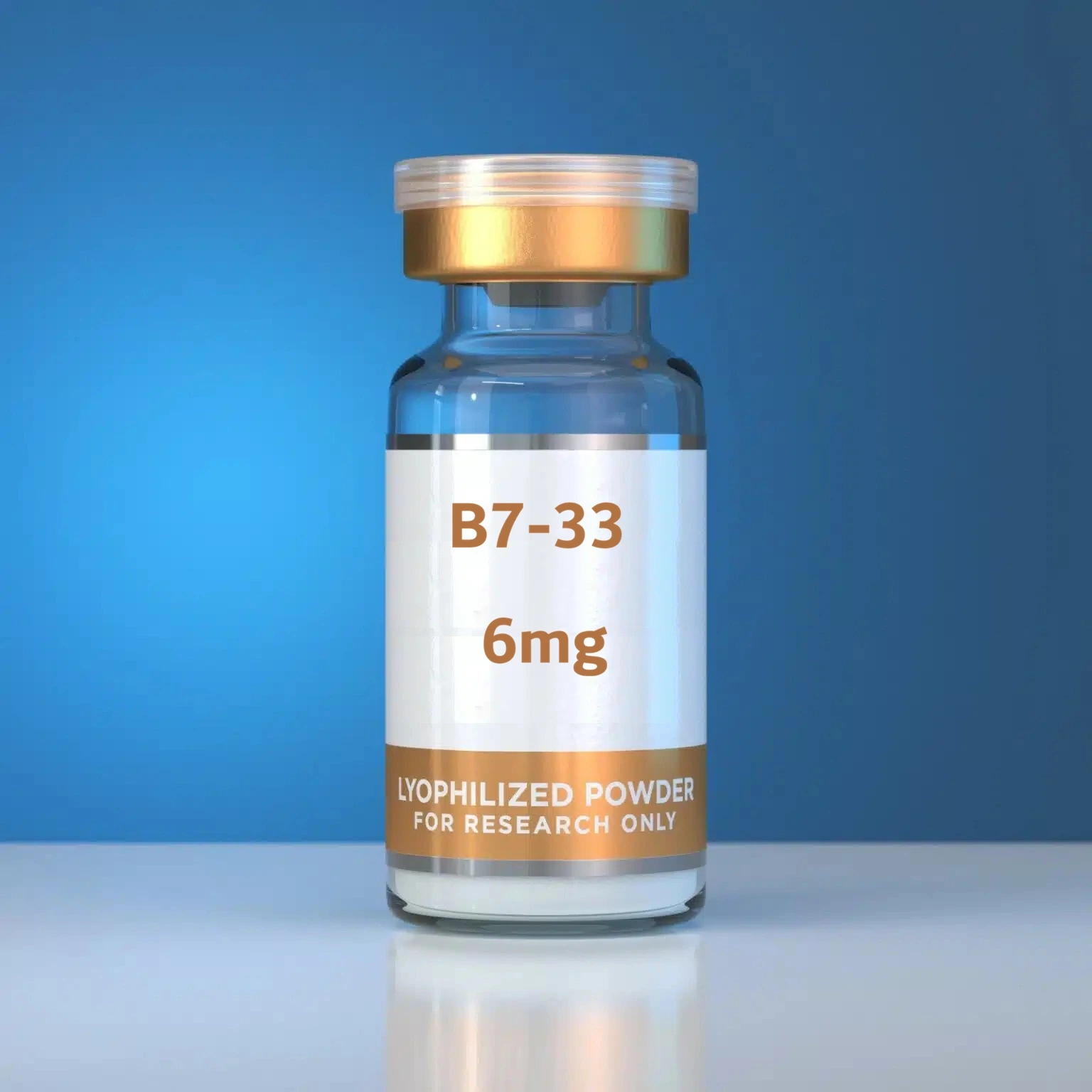
B7-33 6mg Peptide
B7-33 6mg Peptide for sale online at Peptides Link Laboratory.
Buy B7-33 Peptide, a synthetic peptide, derived from the human H2-relaxin protein, renowned for its potent anti-fibrotic capabilities. Unlike some relaxin-related peptides, B7-33 does not increase cAMP production. Instead, it functions by promoting ERK1/2 phosphorylation, facilitating the expression of matrix metalloproteinase 2 (MMP2), and aiding in the degradation of extracellular collagen.
Also, The relaxin family encompasses four proteins: relaxin, insulin-like peptide 3, H3-relaxin, and insulin-like peptide 5. These proteins, closely related to insulin, exert diverse effects on various bodily systems, including musculoskeletal, cardiovascular, and reproductive functions.
In addition, These relaxin peptides interact with four endogenous receptors grouped into two pairs: RXFP1/2 and RXFP3/4, each with distinct functions. RXFP-1, for instance, plays key roles in sperm motility, pregnancy, vascular health, and joint function. These receptors can be stimulated not only by relaxin proteins but also by various other substances, including cAMP, orexin, corticotropin-releasing factor (CRF), insulin-like peptides, and GLP-1. Many of these agonists possess anti-inflammatory, antioxidant, and wound-healing properties. This extensive array of functions has prompted rigorous research into relaxin and its derivatives for treating conditions like acute heart failure and fibrotic disorders.
B7-33 Peptide Specifications
- Purity: >99% (HPLC Tested)
- Form: Lyophilized powder
- Storage: Store at -20°C for long-term stability
- Package Sizes: 6 mg
- Molecular Formula: C₁₃₁H₂₂₈N₄₀O₃₇S
- Molecular Weight: Approximately 2987.5 g/mol
B7-33 Potential Research Benefits
Equally important, B7-33 is used in various studies with test subjects to explore possible ways to influence cell behavior. It is classified as a research chemical and not approved for medical, diagnostic, or therapeutic use. Here are some potential research areas under investigation:
- May help reduce unwanted cell scarring: Some studies suggest it may help lower extra cell support material buildup. Research shows that similar fragments may increase the breaking down of cell “glue”.
- Studying Cell Responses to Signaling Molecules: B7-33 works with certain cell components. This may allow researchers to better understand how cells react to specific signals
- Exploring Blood Vessel Relaxation: Animal studies show that B7-33 might help widen small tubes in test subjects.
- Protecting Capillaries and Small Blood Vessels: B7-33 may also help test subjects’ blood vessels relax gently. This means it could help maintain proper blood flow through capillaries under certain conditions
- Could be important for research on preeclampsia and high blood pressure during pregnancy. Research on placenta cells shows that B7-33 might help balance factors that influence blood flow between a test subject mother and baby.
- Another animal study suggested that B7-33 may help in reducing heart injuries and improving how well the heart works after an injury. This means it might help reduce harmful changes in the hearts of test subjects.
B7-33-peptide Mechanism of Action
Instead of the full, complicated natural hormone, B7-33 is a simple version that researchers add to test subjects in lab studies. In conclusion, It might change how cells communicate inside. This could cut down on extra support material and help blood vessels relax without the side effects of the complete hormone.
In basic terms, B7-33:
- has a flexible shape: Rather than having a stiff, fixed form, B7-33 stays loose and unstructured. This flexibility may help it easily reach and fit into a very specific spot on a cell.
- binds specifically to the RXFP1 receptor: B7-33 is designed to attach only to a specific doorway on the cell surface, called RXFP1. This means it targets specific cell sites without affecting others.
- Avoids unwanted cell messages: Certain substances send a broad signal to cells. This can cause extra actions that we might not want. B7-33 does not start these extra signals, which means it avoids side effects linked to those messages.
- B7-33 takes a different route. It mainly activates the ERK signaling pathway. This is unlike the usual cell messenger system that often involves cAMP.







Reviews
There are no reviews yet.