

Description
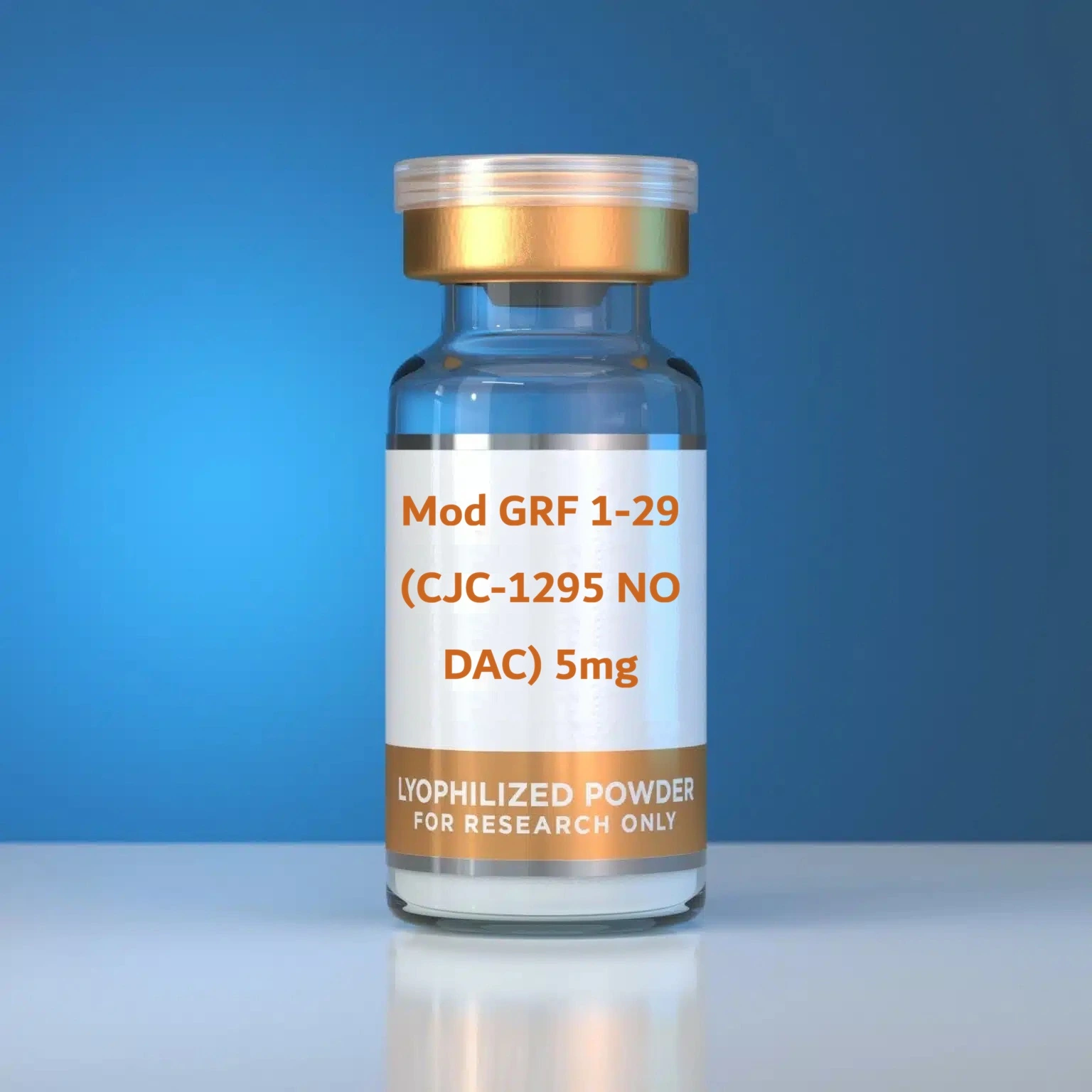
Mod GRF 1-29 (CJC-1295 NO DAC) 5mg
Mod GRF 1-29 (CJC-1295 NO DAC) 5mg for sale online at Peptides Link Laboratory.
Modified GRF (1-29), also known as Mod GRF (1-29) or CJC-1295 without DAC, is a synthetic analog derived from the naturally occurring growth hormone-releasing hormone (GHRH). Researchers in the 1980s observed that the first 29 amino acids of GHRH appeared to retain many of the same properties as the full-length 44-residue protein. This truncated sequence, known as GRF (1-29), became the foundation for further structural modifications designed to improve stability and receptor interactions.
The modified version incorporates four amino substitutions, a change that may increase receptor affinity while providing enhanced protection against oxidation and enzymatic degradation during synthesis and storage. Modified GRF (1-29) is sometimes referred to as Tetra-substituted GRF (1-29) to emphasize these alterations. Importantly, it is structurally similar to the research compound CJC-1295 without the DAC modification.
Research Effectiveness of Mod GRF 1-29 (CJC-1295 NO DAC) 5mg
1. Mod GRF 1-29 and Gastrointestinal Effects
Researchers investigating growth hormone-releasing factor (GRF) analogues for potential therapeutic uses. Examples, such as in treating Crohn’s disease and short bowel syndrome, found unexpected gastrointestinal (GI) side effects in monkeys. One potent analogue, caused severe diarrhea in monkeys during prolonged infusion. Thus, although it had no noticeable side effects in rats. Further analysis revealed that GRF-6 interacts with the vasoactive intestinal peptide receptor (VPAC1-R). Hence, suggesting this receptor is responsible for the diarrheal effects. Since VPAC1-R is found in the GI tract and affects smooth muscle activity. The interaction with this receptor could explain the increased and improved bowel motility in monkeys.
In addition, Another research exploring GRF and 14 GRF analogues’ interactions with vasoactive intestinal peptide (VIP) receptors in rat pancreatic membranes found that some GRF analogues could inhibit VIP binding and activate adenylate cyclase. This interaction could suggest potential for side effects similar to those seen in monkeys. With GRF-6 causing severe diarrhea due to VPAC1-R interaction. The findings highlighted that alterations in specific positions within the peptide structure could markedly reduce receptor affinity and intrinsic activity. Thus, indicating how structural changes in GRF analogues could impact their receptor interactions and consequent side effects. The research underlines the complexity of receptor interactions with therapeutic peptides and the importance of carefully analyzing receptor activities in different species to avoid unwanted GI side effects.
2. Mod GRF 1-29 (CJC-1295 NO DAC) in Diabetes and Heart Functions
Growth hormone-releasing hormone (GHRH) agonists, have been shown to have therapeutic potential beyond inducing pituitary growth hormone (GH) release. These agonists can promote cell proliferation and stimulate various tissues that express GHRH receptors (GHRH-Rs). Notably, GHRH agonists have demonstrated beneficial effects in pancreatic β-cell proliferation and metabolic function improvement. Suggesting their utility in treating diabetes. Studies indicate that GHRH agonists can also enhance the engraftment of islets after transplantation, presenting a novel approach to diabetes therapy. Additionally, they have shown promise in repairing cardiac tissue, as evidenced by improved ejection fraction, reduction of infarct size, and attenuation of cardiac hypertrophy in rodent models. This points to potential applications in cardiac care, especially for heart attack recovery and heart failure treatment.
Beyond their impact on diabetes and heart health, GHRH agonists have demonstrated effects in other therapeutic areas. For instance, the presence of GHRH-Rs in ocular tissues and the neuroprotective effects of GHRH agonists in experimental diabetic retinopathy suggest possible therapeutic applications for eye diseases. GHRH agonists have also been found to accelerate wound healing, activate immune cells, and impact the central nervous system.
3. Mod GRF 1-29 and Growth Hormone Responses in Hypothyroidism
A common issue among individuals with hypothyroidism is the impaired release of growth hormone (GH). To better understand this, researchers conducted a study to evaluate the GH responses to growth hormone-releasing factor (GRF) in patients with primary hypothyroidism. Both before and during thyroxine (T4) replacement therapy. The study involved fourteen patients, aged 26 to 60, who underwent GRF stimulation tests before and after T4 therapy (150 micrograms/day). The findings showed that thyroid hormone replacement therapy (T4) significantly enhanced GH responses to GRF in nine patients and in the group as a whole. Additionally, the area under the curve (AUC) measurements confirmed a general increase in GH response due to T4 therapy. These results suggest that T4 therapy enhances the responsiveness of somatotroph cells to GRF in patients with primary hypothyroidism.
The study provides valuable insights into the interaction between thyroid hormone and GH. Indicating that thyroid hormone replacement therapy can positively influence GH responsiveness. This finding could help improve treatments for patients with hypothyroidism. However, when using modified GRF, some considerations need to be made regarding potential side effects, bioavailability, and dosage scaling. Although GRF exhibits moderate side effects. Equally important, its bioavailability for subcutaneous administration is high, while its oral bioavailability is relatively low.







Reviews
There are no reviews yet.