
Description
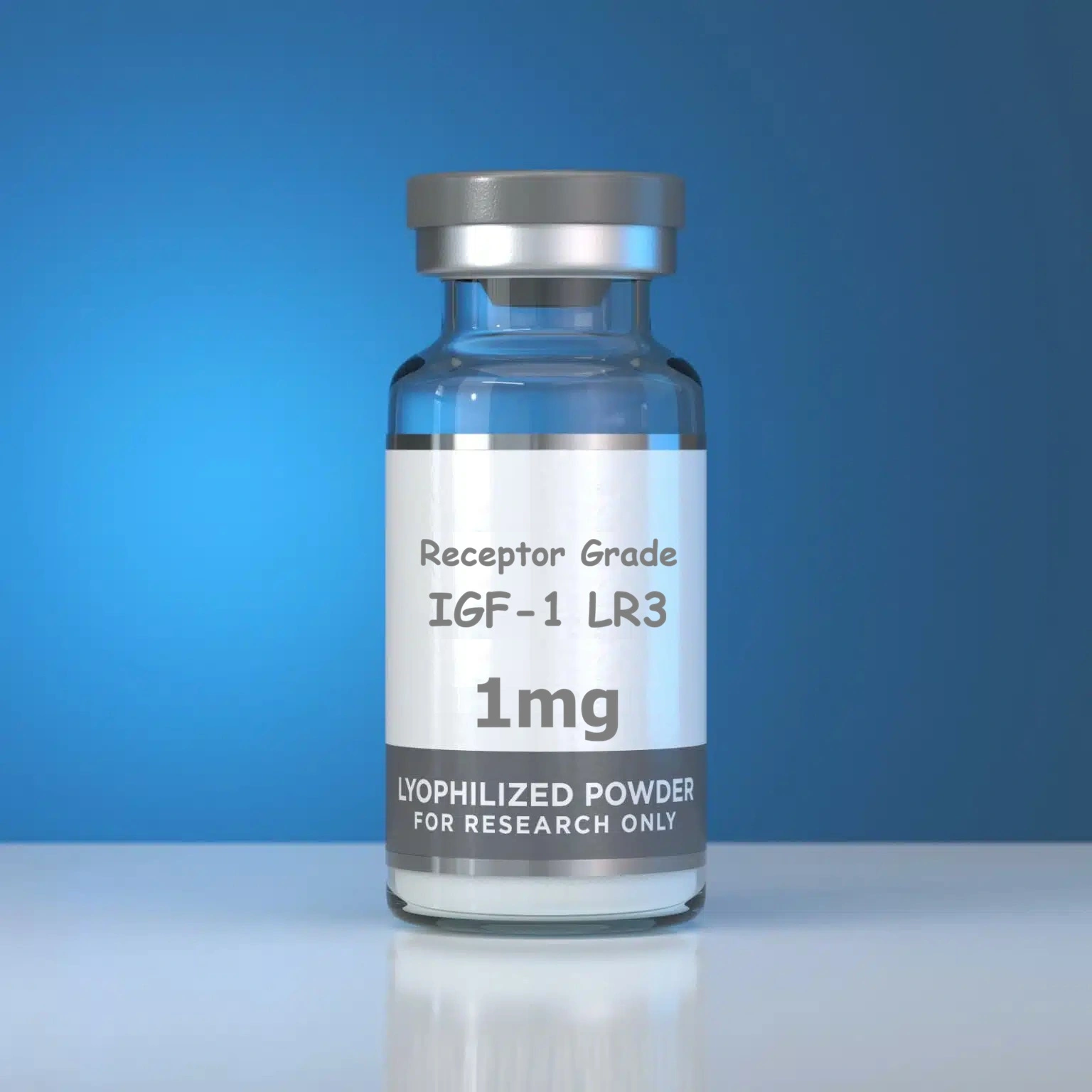
Receptor Grade IGF-1 LR3 (1mg)
Receptor Grade IGF-1 LR3 (1mg) for sale online at Peptides Link Laboratory.
IGF-1 LR3 – Receptor Grade (Insulin-like Growth Factor-1 Long Arg³) is a synthetic analog of native IGF-1 engineered with two key modifications—a 13–amino-acid N-terminal extension and an arginine substitution at position 3—that extend its half-life and reduce its affinity for IGF-binding proteins in vitro. These structural changes make IGF-1 LR3 a preferred tool in pre-clinical research focused on cell growth, protein synthesis, and anabolic signaling. Scientists use the peptide in non-human and cell-culture models to examine pathways driving muscle hypertrophy, myoblast differentiation, glucose uptake, and tissue-repair kinetics. As well as, to map cross-talk between the GH/IGF-1 axis and metabolic regulators.
Chemicals Properties of Receptor Grade IGF-1 LR3
| CAS Number | 946870-92-4 |
|---|---|
| PubChem CID | P000426 |
| Molecular Weight | 9117.6g/mol |
| Molecular Formula | C400H625N111O115S9 |
| Synonyms | Long Arginine 3-IGF-1, Long R3 IGF-1, IGF-1 Long Arg3, Insulin-like Growth Factor-1 Long R3 |
| Storage (Lyophilized) | At 39 Fahrenheit: 2 years At -4 Fahrenheit: 3 years |
Peptides Link Laboratory supplies IGF-1 LR3 as a sterile, lyophilized powder that meets or exceeds 99 % purity. Verified by HPLC and mass spectrometry and is RECEPTOR GRADE. Each batch is produced under GMP-aligned protocols and shipped with a Certificate of Analysis for full transparency. Also, This compound is not approved for human or veterinary use and must be handled exclusively by qualified professionals in controlled laboratory environments. For researchers investigating sustained IGF-1 receptor activation, downstream Akt/mTOR signaling, or comparative studies against native IGF-1, IGF-1 LR3 offers a reliable, high-integrity option for advanced scientific inquiry.
Uses and Benefits of Receptor Grade IGF-1 LR3 (1mg)
1. Receptor Grade IGF-1 LR3 (1mg) Help in Bone Health
IGF-1 deficiency is associated with poor bone health. Thus, A cross-sectional study found that low serum levels of IGF-1 are associated with the increase of vertebral fractures among postmenopausal women with type 2 diabetes. On the other hand, a literature review of clinical studies found that the administration of IGF-1 and growth hormone increases bone resorption and bone formation. Moreover, IGF-1 boosts bone healing and increases movement in patients with tibia and hip fractures.
2. Receptor Grade IGF-1 LR3 (1mg) Helps in Muscle Hypertrophy
Insulin-like growth factor-1 is a myostatin inhibitor that prevents muscle breakdown in conditions like muscular dystrophy. Myostatin, also known as growth differentiation factor 8, affects muscle mass by reducing protein synthesis and muscle growth, thus preventing unwanted hypertrophy [3]. Furthermore, IGF-1 stimulates the proliferation of myoblasts, thus causing an increase in muscle cells. IGF-1 LR3 has a more profound effect on hyperplasia as compared to IGF-1 because of its high potency.
3. Cognition
IGF-1 has been shown to promote neuroprotection by preventing neuronal loss and stimulating cell survival. One study in old-aged animals found that IGF-1 boosts neurogenesis and increases vascular density in brain areas that are involved in learning and memory. Furthermore, IGF-1 increases excitatory synaptic neurotransmission in the hippocampus by 40%. The scientific literature reveals that increased synaptic transmission might be mediated by AMPA receptors and PI3/Akt pathway [6].
4. Muscle Recovery and Healing
Insulin-like growth factor-1 plays a key role in muscle recovery and repair. A study conducted on mouse model found that administration of recombinant IGF-1 LR3 on days 2, 5, and 7 enhanced muscle healing in injured and strained muscles.
Similarly, another study replicated these findings while investigating the impact of IGF-1 on muscle damage in mice. It found that mice treated with IGF-1 showed enhanced muscle regeneration and faster recovery in terms of rapid muscle contractions compared to the control group. Additionally, IGF-1 was linked to an increased number of newly forming muscle fibers at the treated site.
Muscle mass and ability to regenerate muscle cells decline with advancing age. Research indicates that IGF-1 treatment in older individuals can help maintain lean muscle mass.
5. Diabetes
IGF-1 plays an important role in regulating glucose levels within the body. In addition, It interacts with both IGF-1 receptors and insulin receptors, which are responsible for facilitating the uptake of glucose from the bloodstream into liver and muscle cells. This interaction leads to a reduction in blood sugar levels. More so, Scientific studies have revealed that IGF-1 LR3 is associated with a notable enhancement in glucose uptake, resulting in decreased blood glucose levels.
In one study, the administration of IGF-1 to rats with diabetic cardiomyopathy produced several beneficial effects, including a reduction in myocardial apoptosis, oxidative stress, inflammation, interstitial fibrosis, and metabolic irregularities. Additionally, it promoted the activation of the Akt/GSK-3β pathway, suggesting that IGF-1 LR3 therapy holds the potential to treat individuals with diabetic heart muscle-related issues.


Reviews
There are no reviews yet.